
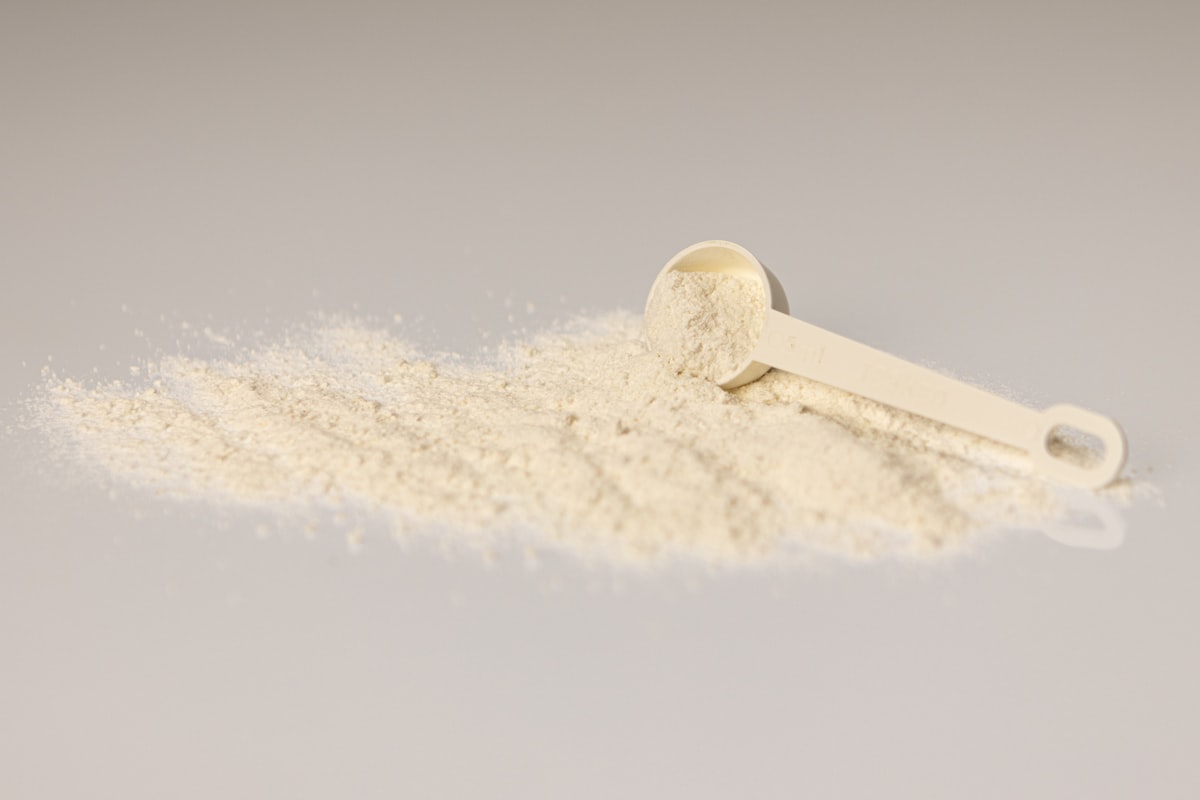
- There are research findings suggesting that collagen intake has a positive effect on skin firmness and elasticity.
- The evidence score is 59, meaning the reliability of this information is moderate.
- This information can be a useful reference for those looking to improve their skin condition.
Collagen is a type of protein.
It is generally taken in forms such as supplements, as a component associated with skin firmness and elasticity.
There are reports suggesting that intake of collagen peptides has some effect on skin condition. Specifically, research has been conducted on a wide range of changes, from surface-level skin condition to aspects related to elasticity.
One study involved 100 women aged 30 to 60. This study was conducted continuously for 84 days. The trial was a randomized controlled trial (a reliable research method that randomly divides participants to compare effects). In other words, this is a method for fairly verifying the effect of a specific ingredient. A comparison using a placebo (a substance that looks and tastes the same but contains no real ingredient, used to rule out psychological effects) was also conducted.
As a result of this study, changes in skin hydration and flaking were reported to have appeared by the 4-week mark. Furthermore, at the 12-week mark, changes in skin wrinkles and elasticity were also confirmed. Results vary by individual, but this suggests that continued intake may be related to skin condition.
Another study also investigated the possibility that collagen intake affects the skin. This study involved 70 healthy adults. It was conducted over 58 days, with an intake amount of 1,650 mg per day.
This trial was also conducted using a randomized controlled trial (a reliable research method that randomly divides participants to compare effects). In other words, it is a framework for confirming results while minimizing the effect of chance.
The results of the study reported changes in skin elasticity and hydration. Specifically, data showed changes not only in surface-level hydration but also in deeper hydration. Furthermore, an increase in skin density was also shown. These changes suggest the possibility that the ingredient taken acted on the skin.
The evidence score based on the current research data is 59, meaning its reliability can be described as moderate. The evidence score (an index that quantifies the certainty of research results) indicates how strongly the information is backed by science.
The current report is based on 2 studies. As such, it has not yet reached the stage where a meta-analysis (a method that combines multiple studies to draw a conclusion) can be conducted. In other words, as more studies accumulate results, the information is likely to become more reliable.
An evidence score of 59 indicates moderate reliability. This can be described as having "a certain degree of certainty," but it still requires further accumulation of research before it can be stated as conclusive. In terms of how to interpret this information, it would be appropriate to regard it as one possibility worth considering, rather than more. It should also be noted that some people may see no effect, and it may not suit everyone's constitution.
| Study | Design | Number of Participants | Duration | Main Result |
|---|---|---|---|---|
| Food & function (2023, PMID:36916504) | Randomized controlled trial (RCT) | 100 | 84 days | A positive effect was reported |
| Journal of microbiology and biotechnology (2025, PMID:40935395) | Randomized controlled trial (RCT) | 70 | 58 days | A positive effect was reported |
This research covers a total of 170 people: 100 women aged 30 to 60 and 70 healthy adults.
Knowing the age range and health status of the participants can be a reference point for considering whether this applies to you.
This report is based on 2 randomized controlled trials (RCTs).
Because there are only 2 studies, care is needed regarding whether the findings apply to everyone.
Another limitation is that the age range of participants and the study duration differ between the two studies.
Does collagen intake affect skin firmness and elasticity?
Research has been reported showing a positive effect on skin firmness and elasticity. The reliability of the research is moderate.
Is collagen related to skin hydration?
There are reports that collagen affects skin water content, wrinkles, and skin flaking. The subjects were healthy adults.
How long does it take for changes from collagen intake to appear?
The studies used periods such as 58 days and 84 days. These are findings related to the duration of collagen intake.
Two studies have reported that collagen has a positive effect on skin firmness and hydration. The evidence score is 59, meaning the reliability can be described as moderate. Because the number of studies is still small at this stage, please use this as one general guide. It's also a good idea to look back at your own condition using a self-check assessment.